PCQI 2.0 - Preventive Controls for Human Food (FSPCA)
Course details
Virtual Instructor-Led
October 19-23, 2026
Certificate of Completion
The course curriculum is based on the guidelines from the Food Safety Preventive Controls Alliance (FSPCA) in conjunction with the FDA.
Overview
This is a virtual, instructor-led course spanning 5 days. Provisions have been made to allow group work & discussions through the use of virtual breakout rooms. These activities will reinforce knowledge and allow students to share experiences. Participant attendance and engagement will be monitored during the course. Certification after the courses requires that participants be present for all FSPCA modules. Individuals who complete the course will receive a certificate of completion accredited by FSPCA and AFDO.
Under the current FDA preventive controls for human food rule domestic and foreign facilities producing human food must develop and implement a food safety plan based on conducting a hazard analysis and identifying appropriate risk-based preventive controls. The written food safety plan must be prepared, or its preparation overseen, by one or more PCQIs (preventive controls qualified individuals). The rule (current Good Manufacturing Practice, Hazard Analysis, and Risk-based Preventive Controls for Human Food regulation § 117.3) defines the PCQI as: “A qualified individual who has completed training in the development and application of risk-based preventive controls at least equivalent to that received under a standardized curriculum recognized as adequate by FDA or is otherwise qualified through job experience to develop and apply a food safety system.”
To become a PCQI, an individual must complete training in the development and application of risk-based preventive controls at least equivalent to that received under a standardized curriculum recognized as adequate by FDA (or have acquired equivalent knowledge through job experience).
Benefits and Learning Objectives
- Understanding the similarities and differences between HACCP (Hazard Analysis and Critical Control Point) and an FSP (Food Safety Plan) under FSMA, including the shift from critical control points to risk-based preventive controls.
- Learning how to conduct a hazard analysis to identify known or reasonably foreseeable biological, chemical, and physical hazards.
- Learning how to identify and implement appropriate preventive controls (PCs), including process, allergen, sanitation, supply-chain, and other controls; establish appropriate parameters, values, and management components; specify critical limits that will control identified hazards.
- Learning how to monitor critical limits and PC parameters and values to ensure that the process remains under control.
- Understanding prerequisite programs, including sanitation programs, environmental monitoring, supplier approval and verification activities, allergen management, and recall plans, and how they integrate into the Food Safety Plan.
- Understanding verification and validation and how they are applied to demonstrate that PCs are being implemented and working as intended.
- Developing corrective action and correction procedures to address deviations and prevent recurrence.
- Understanding how to develop and maintain documents and records that demonstrate the Food Safety Plan is operating effectively.
- Receiving training using an FDA-recognized standardized curriculum.
Meeting the training requirements to qualify as a Preventive Controls Qualified Individual (PCQI). - Receiving an official FSPCA training certificate issued in collaboration with the Association of Food and Drug Officials (AFDO).
Date and Time
Date:
October 19-23, 2026 (Monday-Friday)
Time:
Day 1: 8:00 AM – 12:00 PM PT/ 11:00 AM – 3:00 PM ET (4 hours)
Day 2: 8:00 AM – 1:00 PM PT/ 11:00 AM – 4:00 PM ET (5 hours)
Day 3: 8:00 AM – 1:00 PM PT/ 11:00 AM – 4:00 PM ET (5 hours)
Day 4: 8:00 AM – 12:00 PM PT/ 11:00 AM – 3:00 PM ET (4 hours)
Day 5: 8:00 AM – 12:00 PM PT/ 11:00 AM – 3:00 PM ET(4 hours)
Registration Fee
Registration Fee: $895.00
The registration fee includes:
- Live, virtual instructor-led training
- Course material
Course Location
- Zoom, virtual instructor-led format
Agenda
Students will progress through a series of modules that address the following subject matters:
- Overview of applicable food regulations
- Elements of a food safety plan
- Good Manufacturing Practices (GMPs) and Prerequisite Programs (PRPs)
- Biological food safety hazards
- Chemical food safety hazards
- Physical food safety hazards
- Economically motivated food safety hazards
- Available resources for preparing food safety plans
- First steps in developing a food safety plan
- Performing a hazard analysis
- Determining which preventive controls are appropriate: (Process preventive controls, Sanitation preventive controls, Food allergen preventive controls, Supply-chain preventive controls)
- Preventive control verification and validation procedures
- Record-keeping practices
- Recall plan overview
Who Should Take This Course?
This course is for the person(s) at a food facility who will be responsible for developing, implementing, and modifying the facility’s food safety plan in the role of being a PCQI, or for anyone else at the facility who wishes to know more about the preventive controls for human food final rule and the elements that a Food Safety Plan must-have. Individuals who believe that they are qualified to be a PCQI based on work experience, or who have other food safety certifications (e.g. HACCP, SQF, etc.), may still consider taking this course to ensure that their knowledge is equivalent to that received under a standardized curriculum recognized as adequate by FDA, and to demonstrate equivalency by receiving a training certificate.
Individuals who may wish to take this course include:
- Directors/Vice Presidents/Managers of Food Safety
- Plant Managers
- Production Managers/Leads
- Training Managers
- Quality Assurance Managers and staff
- Sanitation Managers
- Ingredient Suppliers
- Supply Chain Managers
- Operations & Maintenance Managers
Cancellation & Refund Policy
The full payment is required upon registration.
If you need to pay by check, please refrain from proceeding with online registration and contact our office at (206) 522-5432 to complete your registration.
Cancellation policy are as follows:
- On or before October 12th: No fee
- October 13th and beyond: No refunds provided
Refunds will only be issued to the credit card used for payment. Cash or check refunds will not be given.
IEH Academy reserves the right to cancel or reschedule any event due to inadequate enrollment or unexpected circumstances. In such cases, registration fees will be refunded, but IEH Academy is not held liable for additional costs, charges, or expenses, including textbook cancellation or change fees imposed by the Consumer Brand Association.
Interested in registering 10 or more participants for this course? Contact us for pricing and details
Also available is IEH customer service at (206)522-5432 or iehacademy@iehinc.com.
By filling out this information, you are adhering to our privacy policy.
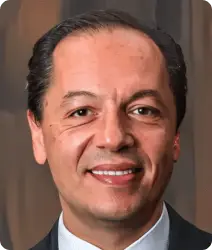
-
Vice President, Technical Services
IEH Laboratories & Consulting Group
Meet the Instructors
Dr. Peyman Fatemi
Dr. Fatemi has served as the head of the corporate laboratory group at Smithfield Foods and as director of food safety at Earthbound Farms. Within the biotech sector, he helped Life Technologies launch their food safety testing platforms to meet the specific needs of food testing customers. He also served as the Technical Director of AEMTEK, Inc.

-
Senior Vice President
Dean, IEH Academy