
Reliable laboratory results depend on consistent procedures, proper documentation, equipment control, and effective oversight. Weak laboratory practices can compromise the integrity of results, regulatory compliance, and overall product confidence.
This course provides an overview of Good Laboratory Practices (GLPs) and their role in producing accurate, reliable, and defensible laboratory results. Participants will examine laboratory organization, record management, result validity, equipment control, metrological traceability, and laboratory safety practices that support regulatory compliance and product integrity.
After completing this course, participants will be able to:
To register for this course, please visit our training portal.
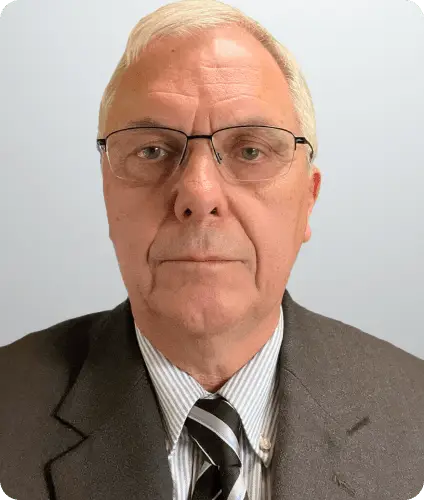
Thomas Hammack joined IEH as Vice President of Technical Services in 2024. He has over 30 years of experience in the field of food microbiology, working at the FDA’s Center for Food Safety and Applied Nutrition (CFSAN). Starting in 1990, he began his tenure at the FDA as a research microbiologist until he became the Chief of the Microbial Methods Development Branch (MMDB) in 2009. In this role, he led a team of 25 microbiologists in developing and validating methods for the detection and characterization of bacterial pathogens and toxins in foods and on environmental surfaces. After a decade as Chief of MMDB, he concluded his tenure as a Senior Policy Analyst for Microbiology in CFSAN’s Office of Regulatory Science.
He is a co-author of FDA’s Bacteriological Analytical Manual’s (BAM) Salmonella, Cronobacter, and Food Sampling and Preparation of Sample Homogenate chapters. During his career, he Chaired the FDA’s Microbiology Methods Validation Subcommittee (MMVS) from 2017 to 2021, which oversees the validation of the microbiological methods used in the FDA’s Foods Program. He also chaired the FDA’s Bacteriological Analytical Manual (BAM) Council from 2009 to 2016. He remained a member of both the BAM Council and MMVS until his retirement at the end of 2023.
Thomas Hammack’s expertise extends beyond his roles at the FDA. He currently serves as an Expert Review Panel member for AOAC International, overseeing the validation of numerous methods for bacterial pathogens, including Salmonella, Listeria, and E. coli O157:H7. Since 2014, he has been a dedicated member of the MicroVal Technical Review Committee. Notably, he served as the Chair of the US Technical Advisory Group to ISO TC 34/SC 9 from 2011 to 2023, the committee responsible for the development of all ISO food microbiological methods.
SELF-PACED ELEARNING
1.5 HOURS
We use cookies to improve your experience on our site. By using our site, you consent to cookies.
Manage your cookie preferences below:
Essential cookies enable basic functions and are necessary for the proper function of the website.
These cookies are needed for adding comments on this website.
Google reCAPTCHA helps protect websites from spam and abuse by verifying user interactions through challenges.
Google Tag Manager simplifies the management of marketing tags on your website without code changes.
Statistics cookies collect information anonymously. This information helps us understand how visitors use our website.
Google Analytics is a powerful tool that tracks and analyzes website traffic for informed marketing decisions.
Service URL: policies.google.com (opens in a new window)
You can find more information in our Privacy Policy and .