IEH Academy

Clostridium botulinum

Course details

Self-Paced eLearning

99.00

1 Hour

Dr. Robert Brackett

Clostridium botulinum is a foodborne pathogen capable of producing potent neurotoxins under certain conditions, making its control an important consideration in food safety. This course provides an overview of C. botulinum, including its growth characteristics, common food sources, and conditions that support toxin production. Participants will also examine preventive measures and control strategies used in food production to reduce the risk of contamination and botulism.

Benefits and Learning Objectives

After completing this course, participants will be able to:
  • Understand the history and food safety risks associated with Clostridium botulinum.
  • Identify the organism’s characteristics, toxin types and growth conditions.
  • Recognize the types, symptoms, and common sources of botulism.
  • Understand detection methods and regulatory considerations.
  • Identify strategies to minimize contamination and control associated risks.
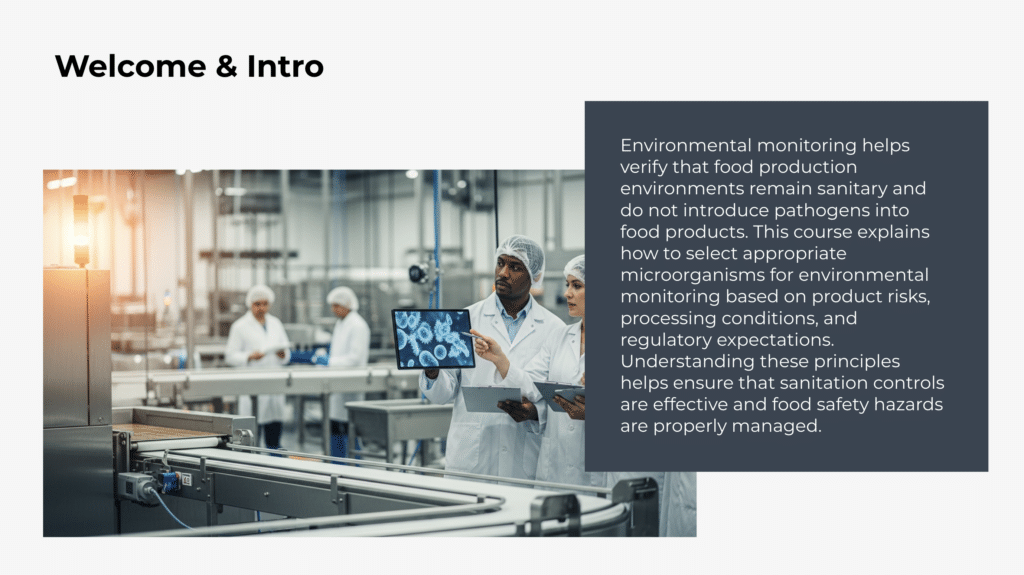
An introductory e-learning course slide titled "Welcome & Intro" shows two quality assurance workers in white lab coats and hairnets examining a digital tablet displaying microscopic bacteria inside a food processing facility. A dark slate text box on the right explains that the course covers how to select microorganisms for environmental monitoring based on product risks, processing conditions, and regulatory expectations.
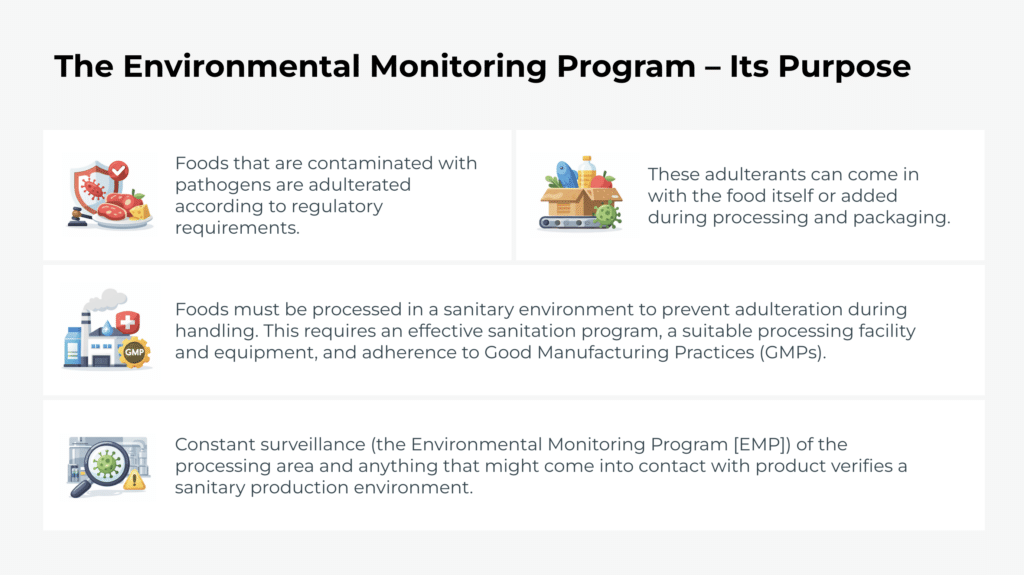
An informational e-learning slide titled "The Environmental Monitoring Program – Its Purpose" uses four icon-paired cards to outline how pathogen contamination occurs and how to prevent it. The text explains that preventing food adulteration requires a sanitary processing environment, Good Manufacturing Practices (GMPs), and constant surveillance through an Environmental Monitoring Program (EMP).
An introductory e-learning course slide titled "Welcome & Intro" shows two quality assurance workers in white lab coats and hairnets examining a digital tablet displaying microscopic bacteria inside a food processing facility. A dark slate text box on the right explains that the course covers how to select microorganisms for environmental monitoring based on product risks, processing conditions, and regulatory expectations.

Agenda

  • Clostridium botulinum: Characteristics, Growth, and Detection
  • Types, Symptoms, and Treatment of Botulism
  • Regulatory Status
  • Common Sources of C. botulinum
  • Prevention and Control Strategies

Who Should Attend?

  • Food Safety and Quality Assurance Professionals
  • Food Scientists and Microbiologists
  • Food Manufacturing and Processing Personnel
  • HACCP and Preventive Controls Team Members
  • Regulatory Affairs and Compliance Professionals

Registration and Payment

To register for this course, please visit our training portal.

Meet the Instructor

Dr. Robert Brackett